Research Review
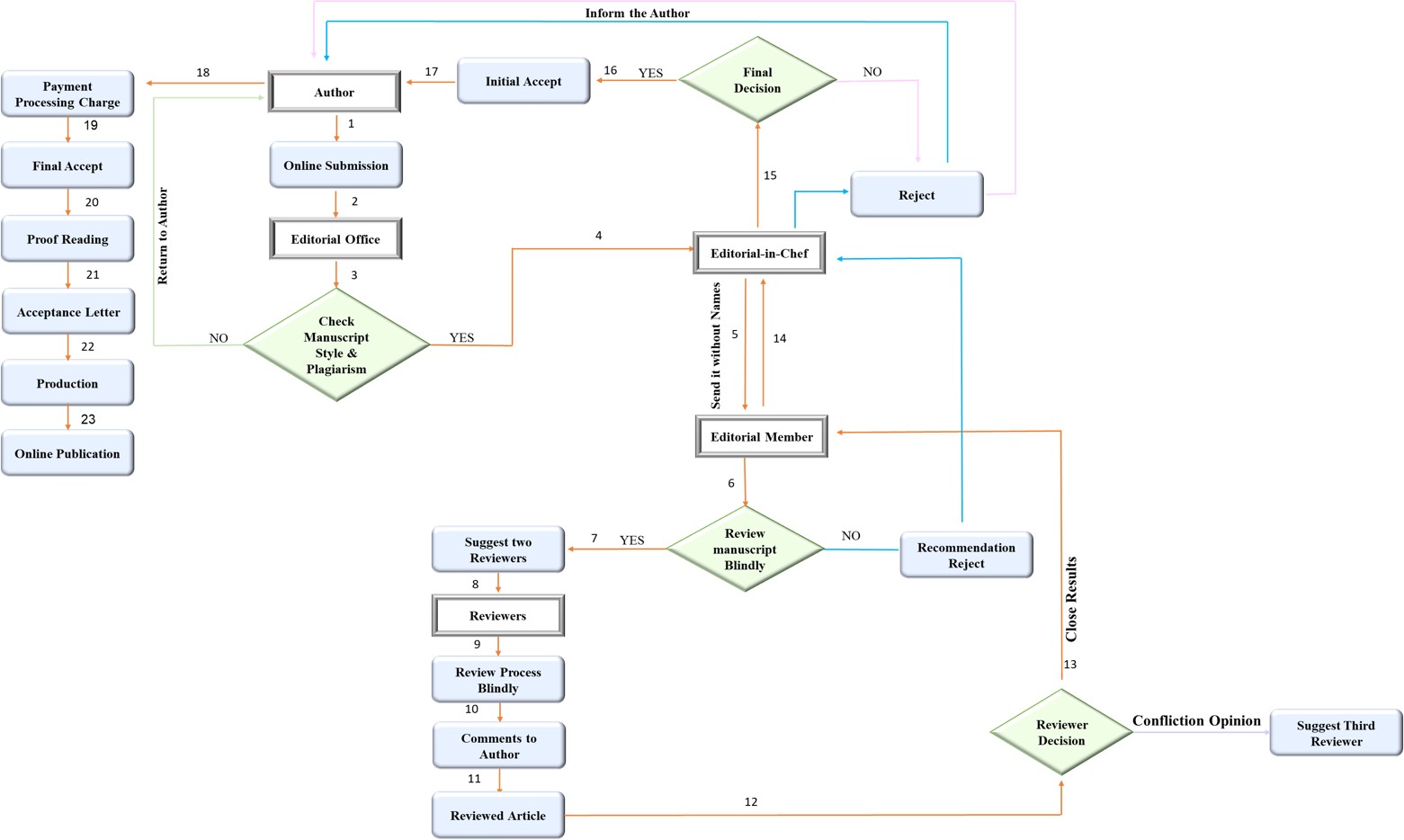
Double-Blind Peer Review Process:
Steps of the Paper Review Process in Journal
1. Submission of the Paper:
The corresponding author must submit the manuscript through the Al-Bahith Journal website. The corresponding author is responsible for the paper throughout the submission and review process. It must be ensured that all co-authors meet the authorship criteria, are listed in the author list (in the proper order), and have read and approved the submitted version of the paper.
2. Editorial Secretary Check:
The Managing Editor verifies that the paper complies with all publication requirements available to authors on the journal’s website in the Author Guidelines.
3. Initial Editorial Review:
An anonymized version of the paper (with author names removed) is sent to the most knowledgeable editor in the relevant subject area for a comprehensive assessment. The editor ensures that the manuscript meets the following journal criteria:
- The subject falls within the scope of the journal.
- Compliance with the journal’s submission guidelines.
- Use of appropriate scientific language.
- Originality of the paper.
- Adherence to paper ethics standards.
- Acceptable similarity/quotation rate.
- The paper is not under review by another journal.
If the paper meets these criteria, the editor recommends two suitable peer reviewers. If not, the paper is declined at this stage based on the initial editorial review.
4. Reviewer Invitations:
Invitations are sent to the proposed reviewers selected by the editors based on their expertise and alignment with the paper topic. If one or more invitations are declined, additional reviewers are invited.
5. Peer Review Process:
The double-blind review process typically involves exchanges between editors and reviewers. Upon receiving the manuscript from the editor, reviewers are expected to submit their evaluation within approximately four weeks.
Reviewers assess the following criteria:
- Soundness of methodology, identification of scientific errors, and evaluation of design and tools used.
- Importance of the paper through the validity and significance of results.
- Originality of the work and its contribution to the scientific field.
- Relevance and currency of references, and identification of missing or inaccurate citations.
- Recommendation regarding the paper: Accept – Reject – Minor Revisions – Major Revisions.
6. Evaluation of Review Reports:
If the review outcome requires minor or major revisions, the author is notified and provided with constructive feedback from reviewers to improve the paper. Upon resubmission of the revised version, the paper is sent back to the reviewers for reassessment. This cycle may continue for up to three rounds until a final decision is reached.
In cases of conflicting reviewer reports, a third reviewer is invited to provide an additional evaluation. The final recommendation is then made by the editorial board.
7. Author Notification of Final Decision:
The final decision (acceptance or rejection) is approved by the Editor-in-Chief, confirmed through the journal’s electronic system, and communicated to the corresponding author via email and the journal’s website. In cases of rejection, the decision is communicated with relevant feedback from editors or reviewers without disclosing reviewer identities.
8. Post-Acceptance Production:
Once accepted, the manuscript proceeds to production, which includes language editing, formatting, and typesetting to prepare it for publication in the assigned issue.